
Understanding Ohio’s Medicaid Changes in 2026: What Seniors Need to Know

Published on SeniorImpact.com  |  May 2026  |  Cincinnati, Ohio


Medicaid is a lifeline for hundreds of thousands of Ohio seniors, covering everything from nursing home care to in-home assistance to prescription drugs that Medicare alone doesn’t fully handle. But the program evolves every year, and 2026 has brought several changes that seniors and their families should understand. This article breaks down what’s changed, what it means for you, and where to get help navigating the system.

The Medicaid Unwinding Is Still Affecting Ohio Seniors

The COVID-era continuous enrollment protections that prevented states from dropping people from Medicaid ended in 2023, and the effects are still rippling through Ohio’s system. During the “unwinding,” many seniors lost coverage—not because they were ineligible, but because they missed renewal paperwork or because the state had outdated contact information. If you or someone you know was dropped from Medicaid in the past two years, it’s worth reapplying. Eligibility hasn’t necessarily changed; the paperwork process just caught people off guard. Your local County Department of Job and Family Services can help you reapply, and the process can be done online, in person, or by phone.

Income and Asset Limits for 2026

Ohio Medicaid eligibility for seniors is based on income and, in some cases, assets. For the Aged, Blind, and Disabled (ABD) category that most seniors fall under, the income limit is tied to the Federal Poverty Level and adjusted annually. For 2026, a single individual generally qualifies if their monthly income is at or below approximately $1,732 (this figure may have been adjusted—confirm with your caseworker). Married couples have a higher threshold. Asset limits also apply for certain programs, though Ohio has eliminated the asset test for many Medicaid categories. Your home, one vehicle, and certain other assets are typically excluded from the count.

Important: Medicaid eligibility rules are complex and depend on which specific program you’re applying for. The numbers above are general guidelines. Always verify current limits with your County Department of Job and Family Services or a certified Medicaid planner.

Ohio’s PACE Program: A Hidden Gem for Cincinnati Seniors

The Program of All-Inclusive Care for the Elderly, known as PACE, is one of the most comprehensive senior care programs available in Ohio, and many Cincinnati families have never heard of it. PACE is designed for adults age 55 and older who qualify for nursing home-level care but want to remain living at home. The program provides coordinated medical care, adult day services, transportation, meals, home care, prescriptions, and more—all through a single provider. PACE programs are available in most, but not, Ohio counties. Call you local Area Agency on Aging to see if a PACE center serves your ares. If you qualify for both Medicare and Medicaid, PACE can cover virtually all of your healthcare needs with no premiums and minimal or no copays.

The Medicaid Waiver Programs: Staying Home Instead of a Nursing Facility

Ohio operates several Medicaid waiver programs that allow seniors to receive care in their own homes or in community settings rather than in nursing homes. The most relevant for Cincinnati seniors are the PASSPORT waiver and the MyCare Ohio program. PASSPORT provides home-delivered meals, personal care assistance, home modifications, emergency response systems, and adult day care. MyCare Ohio integrates Medicare and Medicaid benefits into a single managed care plan for people who are eligible for both. These programs can make it financially possible to age in place even when you need significant daily assistance. The catch is that waiver programs often have waiting lists, so applying early is important.

What the Federal Medicaid Debate Means for Ohio

At the federal level, there is ongoing debate about restructuring Medicaid funding, including proposals to convert federal Medicaid funding to block grants or per-capita caps. If enacted, these changes could significantly affect Ohio’s Medicaid program and the services available to seniors. While nothing has been finalized as of early 2026, Ohio seniors and their families should be paying attention. Advocacy organizations like AARP Ohio, the Ohio Academy of Senior Health Sciences, and the Universal Health Care Action Network of Ohio are tracking these proposals and can help you stay informed and make your voice heard.

How to Apply or Renew in Ohio

If you need to apply for Ohio Medicaid or renew your coverage, you have several options. You can apply online through the Ohio Benefits Self-Service Portal, call the Hamilton County Department of Job and Family Services directly, or visit their office in person. For help navigating the application, the Council on Aging of Southwestern Ohio offers free Medicaid counseling, and Pro Seniors provides legal assistance for seniors facing Medicaid denials or complications. The Ohio Senior Health Insurance Information Program (OSHIIP) can also help you understand how Medicaid works alongside your Medicare coverage.

Medicaid Planning: It’s Not Too Late

If you or a family member may need long-term care in the future, Medicaid planning with a qualified elder law attorney can protect assets while ensuring eligibility. Ohio has a five-year “look-back” period for asset transfers, which means planning ahead is essential. Several elder law firms specialize in Medicaid planning, and your area Bar Association can provide referrals. Don’t wait until you’re in a crisis to explore your options—the earlier you plan, the more options you have.

•  •  •

The bottom line: Ohio’s Medicaid system is complicated, but it provides vital services that can dramatically improve quality of life for Ohio seniors. Whether you’re applying for the first time, renewing your coverage, or exploring waiver programs to stay in your home, help is available. Don’t try to figure it out alone.

Need help with Medicaid? Start with Pro Seniors at 1-800-488-6070. You can also contact your Area Agency on Aging. A list of Ohio AAA’s is available in any of our Ohio Older Adults Resource Guides at http://www.seniorimpact.com/view-our-guides. And share this article with a family that might need this information.


Want to Avoid Probate? This Simple Little Tool Can Be a Big Help

Last Will and testament document on wooden table close up

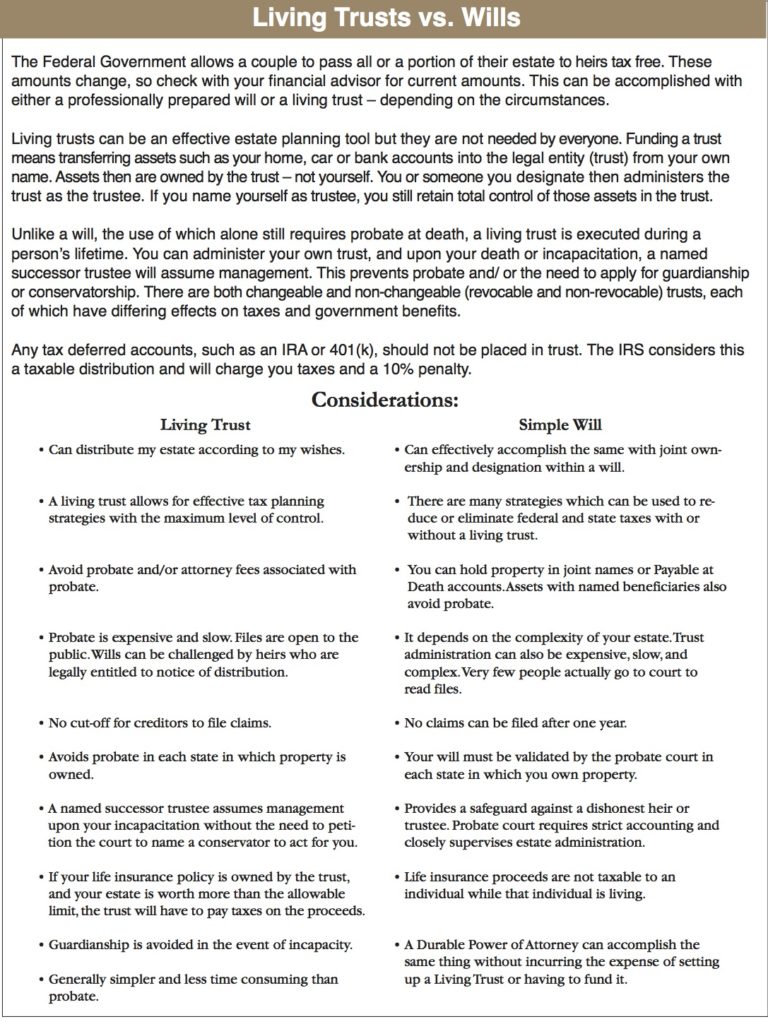
Most of us, when we die, would like to make sure our assets are distributed in the manner we would like. With that in mind, we draft a will to ensure our wishes are carried out. When you die with a will (or even without one), your estate is referred to Probate Court, which is entrusted to make sure your assets are distributed in the way you intended. Probate Courts do a great job at this, but there can be drawbacks. A will can be contested if someone feels it was written under duress or mental impairment. Courts can also be very particular, so if every penny is not accounted for the distribution of assets may not be approved. It can be a long process, and you will most likely incur attorney’s fees. It is also public record, meaning anyone can view your will and any Probate Court filings.

However, there are methods to avoid probate. The most popular involve setting up a trust (which can be costly and will involve an attorney) or dual ownership of an asset (such as a home or bank account). One often overlook tool, though, is what is referred to as a Transfer on Death (TOD) designation.

A TOD typically works in the same manner as an insurance policy, which has a named beneficiary, except the TOD is used for investment or bank accounts. Say, for instance, that you have $50,000 in an investment account. Normally, when you die, that $50,000 would be called a “Probatable Asset” meaning the $50,000 would be part of the assets that would go into probate. However, with a TOD, there is no need for probate since you already have a designated beneficiary. In this case, your assets will transfer directly to your beneficiary (or beneficiaries) instead of being tied up in Probate Court. Another advantage of a TOD is that you can easily change your beneficiary by simply filling out a new form. With a will, you will need to draft a codicil explaining your wishes, or draft an entirely new will.

While a TOD may not solve all your problems if you wish to avoid probate, this little known tool is useful to keep certain assets out of probate, giving you the ability to ensure your assets are transferred quickly to your beneficiaries.

Making Sure You Know Where Your Parents’ Important Documents and Assets are Before It’s Too Late

We don’t like to think about our parents getting sick, or dying. But oftentimes with seniors, health can deteriorate quickly. Because of this, it’s important that you know the location of the documents you may need in order to free up assets for their care, or other issues that may arise.

A few years before my father passed away, we sat down and went over all of his investments, his trust and other important papers like his will and living will. Fortunately most of his investments passed onto my mother so there were not many sticky situations. Still, it took a couple years to settle a trust he had set up back in the 70’s.

So when you sit down with your parents (or your children) make sure you discuss the following accounts/documents.

  • Cash Accounts (Bank Accounts, CD’s, money market, etc.)
  • Real Estate (Mortgage, deed)
  • Vehicle Titles (cars, motorcycles, boats, RV’s, etc.)
  • Insurance (Beneficiary)
  • Securities (Stocks, etc.)
  • Pensions, Retirement Accounts
  • Personal Property not kept in house or easily visible (jewelry, collectibles, etc.)
  • Advance Directives (Living will, healthcare power of attorney)
  • Wills, trusts

Make sure you make copies of any original documents such as wills, deeds, titles, or any other estate planning documents. Spending a few hours gathering this information before it’s too late can save hours and hours of potential work and headaches later, or lead to not finding certain assets at all.

The Three (and likely four) Documents Every Senior Needs

.

Nobody likes to think about growing old, and planning for when we may no longer be around. It’s really not a fun task, but one most of us know is necessary. However, almost half of us age 55 and older have no will, and many of those with a will do not have the other documents needed to ensure their final years are lived the way they choose. The following three (and likely four) documents mentioned below are ones everyone should have in place.

1. Will

Most everyone knows what a will is – a legal document stating how you would like assets distributed after your death. It’s typically a straightforward process, especially if you are married and want to leave everything to your spouse and kids. Technically, a will does not need to be written by an attorney, but it is highly recommended that it be done by one in order to make sure it is done properly.

2. Living Will

A living will is a document which lets healthcare professionals know what to do when you are too sick to communicate. It can indicate whether you when you would like medical treatment to stop, or whether you want passive feeding (a feeding tube) to be withdrawn. This document makes sure your wishes are followed, and can spare loved one agonizing decisions about your healthcare. Unlike a will, an attorney does not need to draft this. In fact, many living will forms can be found online (many state Bar Associations have drafted a living will that can be easily downloaded). Just make sure you have it notarized or witnessed (the amount of witnesses may vary by state). The great thing about a Living Will is that a copy is as good as an original, so once you have completed a Living Will it is a good idea to give copies to your loved ones and any medical professionals you see on a regular basis.

3. Durable Healthcare Power of Attorney

Just as a living will gives you the power to decide your care, a durable healthcare power of attorney gives that power to someone else if you are not able. This typically applies in cases where you are either physically or mentally unable to make a decision about your care.

4. “Financial” Power of Attorney

A power of attorney (POA) can be a wonderful tool to ensure that your financial decisions are being made if you are no longer capable of making such decisions. It can take away the worry of making sure your bills are being paid, deposits are being made, taxes are being paid, and more. However, there are dangers. The individual you name in your POA has complete control over you finances, meaning the possibility of abuse and/or fraud is present. In order to minimize this risk, make certain that person named in your POA is someone you absolutely trust. This is one document that you should have an attorney prepare for you. If you are not comfortable with someone taking over your finances, you may not want to draft this document. It is important to note, though, that as people age their change of becoming disabled increase, so this is something to definitely consider when deciding whether you should execute a POA.

There are other documents you can prepare to help ensure your health and financial wishes are met, but the above are vital, and every individual in their 50’s or older should definitely consider preparing these documents.