

Safety in the Home: Questions to Consider

As we get older, the need to remain safe in our homes increases, and steps need to be taken to make sure injury risks are kept to a minimum. With that in mind, here are questions you should ask to make sure your home is as safe as it can be.

Lighting 

• Is the lighting adequate but not glare-producing?

• Are the light switches easy to reach and to turn on?

• Can lights be turned on before entering rooms?

• Are night-lights used in appropriate places?

Hazards

• Are there throw rugs, highly polished floors or other hazardous floor
coverings? If so, where?
Can they be removed or made less hazardous?

• Do area rugs have non slip backing and are the edges tacked to the floor?

• Are cords, clutter or other obstacles in the pathways?
If yes, can they be cleared?

• Are doorways wide enough to accommodate assistive devices?

• Do door thresholds create hazardous conditions?

• How does the person obtain objects from hard to reach places? (chairs can
be hazards)

Furniture

• Are chairs the right height and depth for the individual?

• Do chairs have arm rests?

• Are tables sturdy and will not tip if leaned on?

• Is small furniture placed away from pathways?

Stairways

• Are there light switches at the top and bottom of the stairs?

• Are there securely fastened handrails on both sides of stairs?

• Are all the steps even?

• Should colored tape be used to mark the edges of the steps, particularly
the top and bottom?

Bathroom

• Are grab bars placed appropriately for the tub and toilet?

• Does the tub have skid proof straps or a rubber mat in the bottom?

• Is there a tub or shower seat available?

• Can the shower head be replaced by a hand held shower head?

• Is the height of the toilet appropriate?

Bedroom

• Is the height of the bed appropriate?

• Is the mattress firm enough at the edges to provide enough support for
sitting?

• If the bed has wheels, are they locked securely?

• Would side rails be a help or a hazard?

• When side rails are down, are they completely out of the way?

• Is the pathway between bedroom and bathroom clear of objects and well
lighted at night?

• Would a bedside commode be useful, especially at night?

Kitchen

• Are storage areas used to the best advantage-e.g. frequently used objects in the most accessible places?

• Are appliance cords in good condition and out of the way?

• Are non slip mats used in front of the sink?

• Are the markings on stoves and other appliances clearly visible?

Emergency

• Is an emergency response system available (911)?

• Does the person know how and when to use it?

• Would a private emergency call service be helpful?

• Is the person’s vital information listed in a place where it would be
accessible in an emergency?

Temperature

• Is the temperature comfortable for the person?

• Can the person read the marking on the thermostat and adjust it?

• Is water temperature less than 110 Fahrenheit?

• During hot weather, is there adequate ventilation?

• During cold weather, is the furnace working properly?
Want to Avoid Probate? This Simple Little Tool Can Be a Big Help

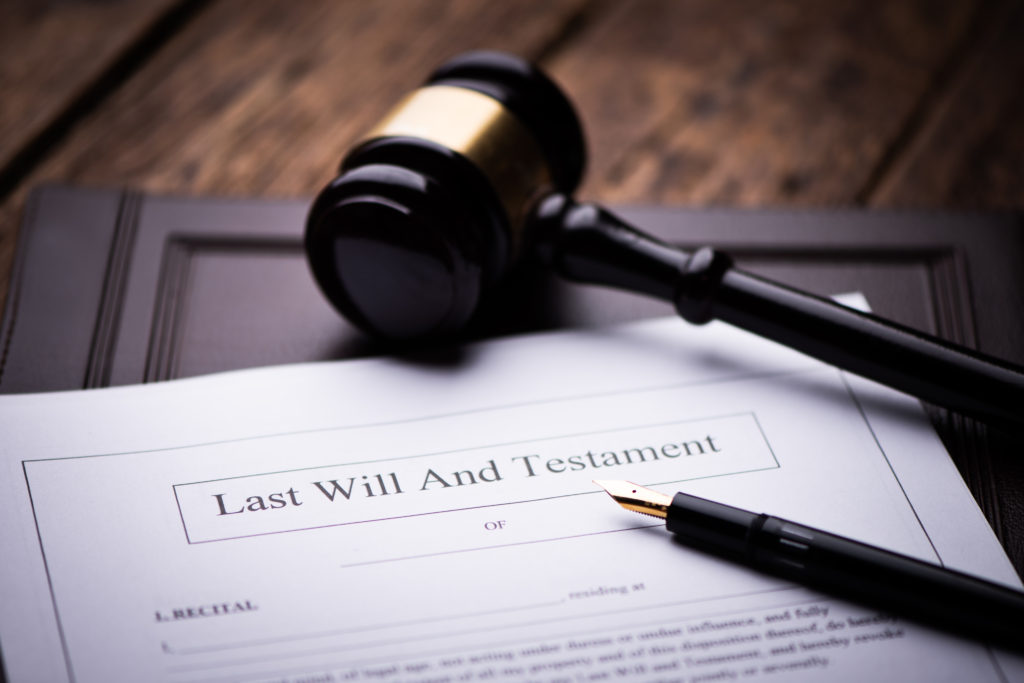
Last Will and testament document on wooden table close up

Most of us, when we die, would like to make sure our assets are distributed in the manner we would like. With that in mind, we draft a will to ensure our wishes are carried out. When you die with a will (or even without one), your estate is referred to Probate Court, which is entrusted to make sure your assets are distributed in the way you intended. Probate Courts do a great job at this, but there can be drawbacks. A will can be contested if someone feels it was written under duress or mental impairment. Courts can also be very particular, so if every penny is not accounted for the distribution of assets may not be approved. It can be a long process, and you will most likely incur attorney’s fees. It is also public record, meaning anyone can view your will and any Probate Court filings.

However, there are methods to avoid probate. The most popular involve setting up a trust (which can be costly and will involve an attorney) or dual ownership of an asset (such as a home or bank account). One often overlook tool, though, is what is referred to as a Transfer on Death (TOD) designation.

A TOD typically works in the same manner as an insurance policy, which has a named beneficiary, except the TOD is used for investment or bank accounts. Say, for instance, that you have $50,000 in an investment account. Normally, when you die, that $50,000 would be called a “Probatable Asset” meaning the $50,000 would be part of the assets that would go into probate. However, with a TOD, there is no need for probate since you already have a designated beneficiary. In this case, your assets will transfer directly to your beneficiary (or beneficiaries) instead of being tied up in Probate Court. Another advantage of a TOD is that you can easily change your beneficiary by simply filling out a new form. With a will, you will need to draft a codicil explaining your wishes, or draft an entirely new will.

While a TOD may not solve all your problems if you wish to avoid probate, this little known tool is useful to keep certain assets out of probate, giving you the ability to ensure your assets are transferred quickly to your beneficiaries.

Making Sure You Know Where Your Parents’ Important Documents and Assets are Before It’s Too Late

We don’t like to think about our parents getting sick, or dying. But oftentimes with seniors, health can deteriorate quickly. Because of this, it’s important that you know the location of the documents you may need in order to free up assets for their care, or other issues that may arise.

A few years before my father passed away, we sat down and went over all of his investments, his trust and other important papers like his will and living will. Fortunately most of his investments passed onto my mother so there were not many sticky situations. Still, it took a couple years to settle a trust he had set up back in the 70’s.

So when you sit down with your parents (or your children) make sure you discuss the following accounts/documents.

  • Cash Accounts (Bank Accounts, CD’s, money market, etc.)
  • Real Estate (Mortgage, deed)
  • Vehicle Titles (cars, motorcycles, boats, RV’s, etc.)
  • Insurance (Beneficiary)
  • Securities (Stocks, etc.)
  • Pensions, Retirement Accounts
  • Personal Property not kept in house or easily visible (jewelry, collectibles, etc.)
  • Advance Directives (Living will, healthcare power of attorney)
  • Wills, trusts

Make sure you make copies of any original documents such as wills, deeds, titles, or any other estate planning documents. Spending a few hours gathering this information before it’s too late can save hours and hours of potential work and headaches later, or lead to not finding certain assets at all.

The Three (and likely four) Documents Every Senior Needs

.

Nobody likes to think about growing old, and planning for when we may no longer be around. It’s really not a fun task, but one most of us know is necessary. However, almost half of us age 55 and older have no will, and many of those with a will do not have the other documents needed to ensure their final years are lived the way they choose. The following three (and likely four) documents mentioned below are ones everyone should have in place.

1. Will

Most everyone knows what a will is – a legal document stating how you would like assets distributed after your death. It’s typically a straightforward process, especially if you are married and want to leave everything to your spouse and kids. Technically, a will does not need to be written by an attorney, but it is highly recommended that it be done by one in order to make sure it is done properly.

2. Living Will

A living will is a document which lets healthcare professionals know what to do when you are too sick to communicate. It can indicate whether you when you would like medical treatment to stop, or whether you want passive feeding (a feeding tube) to be withdrawn. This document makes sure your wishes are followed, and can spare loved one agonizing decisions about your healthcare. Unlike a will, an attorney does not need to draft this. In fact, many living will forms can be found online (many state Bar Associations have drafted a living will that can be easily downloaded). Just make sure you have it notarized or witnessed (the amount of witnesses may vary by state). The great thing about a Living Will is that a copy is as good as an original, so once you have completed a Living Will it is a good idea to give copies to your loved ones and any medical professionals you see on a regular basis.

3. Durable Healthcare Power of Attorney

Just as a living will gives you the power to decide your care, a durable healthcare power of attorney gives that power to someone else if you are not able. This typically applies in cases where you are either physically or mentally unable to make a decision about your care.

4. “Financial” Power of Attorney

A power of attorney (POA) can be a wonderful tool to ensure that your financial decisions are being made if you are no longer capable of making such decisions. It can take away the worry of making sure your bills are being paid, deposits are being made, taxes are being paid, and more. However, there are dangers. The individual you name in your POA has complete control over you finances, meaning the possibility of abuse and/or fraud is present. In order to minimize this risk, make certain that person named in your POA is someone you absolutely trust. This is one document that you should have an attorney prepare for you. If you are not comfortable with someone taking over your finances, you may not want to draft this document. It is important to note, though, that as people age their change of becoming disabled increase, so this is something to definitely consider when deciding whether you should execute a POA.

There are other documents you can prepare to help ensure your health and financial wishes are met, but the above are vital, and every individual in their 50’s or older should definitely consider preparing these documents.